
Google charges your card every day. The clicks show up in your dashboard. But the bookings on your calendar don't match what you're spending.
The problem usually isn't the amount of traffic. It's the type of traffic. Most med spa ad budgets are spent on people who were never going to book, while the people ready to book right now go to a competitor.
I used to work at Google as an Account Strategist. I reviewed more than 200 local ad accounts — med spas, dentists, home services. The same problem showed up in almost every one: the owner was paying for clicks, and most of those clicks came from people with no intention of buying.
Google will not explain this to you. So I will.
On Facebook, your ad interrupts someone who wasn't thinking about your service. To get a booking, you first have to create the interest. That's why Facebook clicks are cheap, around $3, and why most of them don't lead to anything.
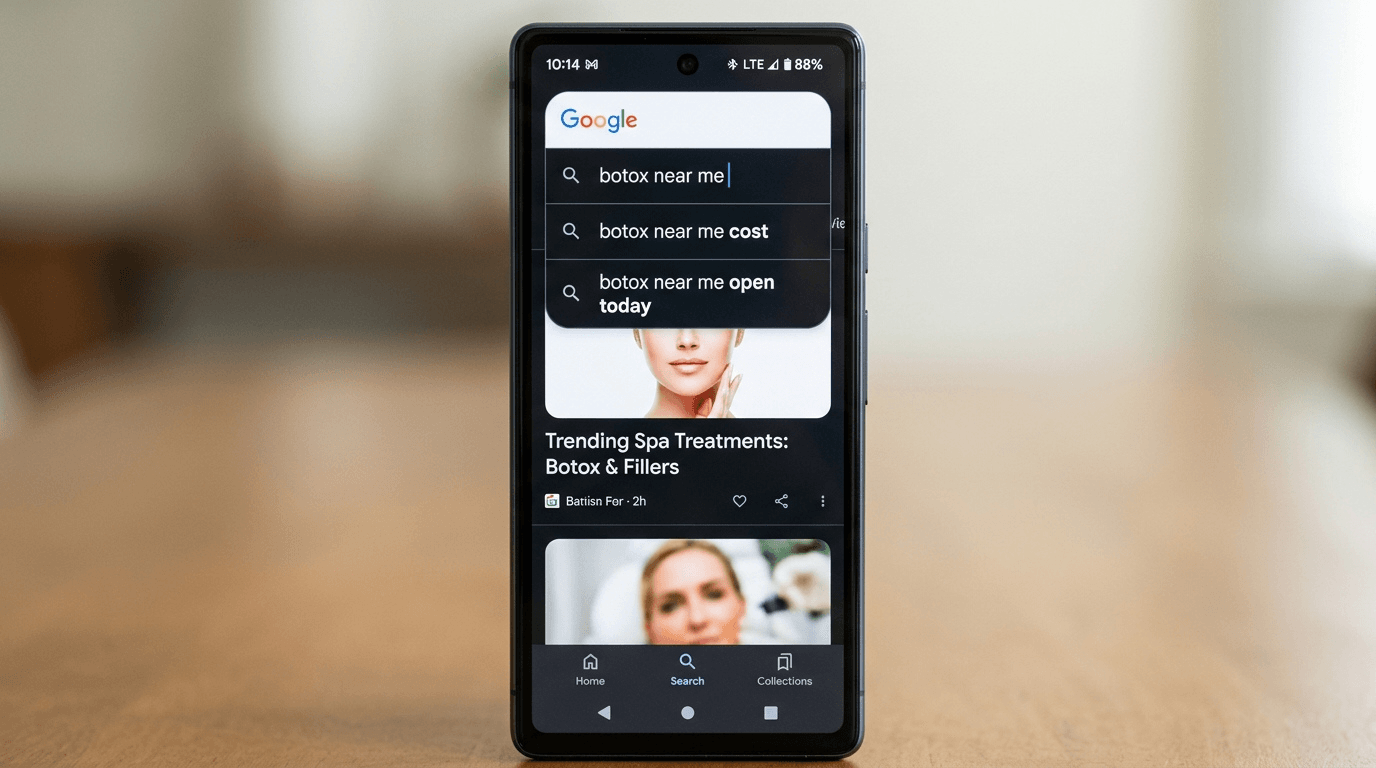
On Google Search, the person has already decided they want the treatment. They typed "laser hair removal near me" because they're now choosing a provider. Your ad doesn't have to convince them to want it. It only has to convince them to pick you.
This is called intent. It's why a Google click in your market costs $12–15 instead of $3, and it's why that price can be worth paying. You're paying to appear at the moment someone is choosing a clinic.
Not every Google search is worth paying for. The exact words a person types tell you how close they are to booking:
- "what is botox" — researching. Might book in six months. Might never book.
- "botox cost near me" — comparing prices between clinics.
- "botox clinic open saturday" — ready to book now.
Research searches happen far more often than booking searches. If your account isn't set up to filter them, your budget gets spent on researchers and price shoppers, and it runs out before it reaches the people ready to book. The owner sees lots of clicks and few appointments, and concludes Google Ads doesn't work.
The platform works. The budget was spent on the wrong searches.
A high intent campaign fixes this. It's an account set up to bid on ready-to-book searches and block the rest. Same budget, better patients.
When your ads target ready-to-book searches and send people to a page built for booking, your results become consistent. You can see what you spend and how many patients it brings in each month.
That consistency lets you make real decisions. A new Botox patient spends around $300 on her first visit. Over a year — repeat visits plus retail — she's worth about $1,200 to your clinic. If it costs you $150 in ads to acquire her, you're making $8 for every $1 spent. Once you know those two numbers for your own clinic, you know exactly how much you can spend on ads and still profit.
Most owners never reach this point because their accounts produce random results — random because the budget is going to low-intent searches. Fix the targeting and the results become predictable enough to plan around.
New accounts come with several default settings that spend your budget on low-quality traffic.
One example: when you create a Search campaign, two boxes come pre-checked. The first opts you into the Display Network — your ad runs as a banner on random websites and apps, where people misclick it and you pay for each one. The second opts you into Search Partners — non-Google sites with a search box, where traffic quality is far below Google itself. Neither has anything to do with someone searching for your services. Both are on by default, and the checkboxes are buried in the campaign settings.
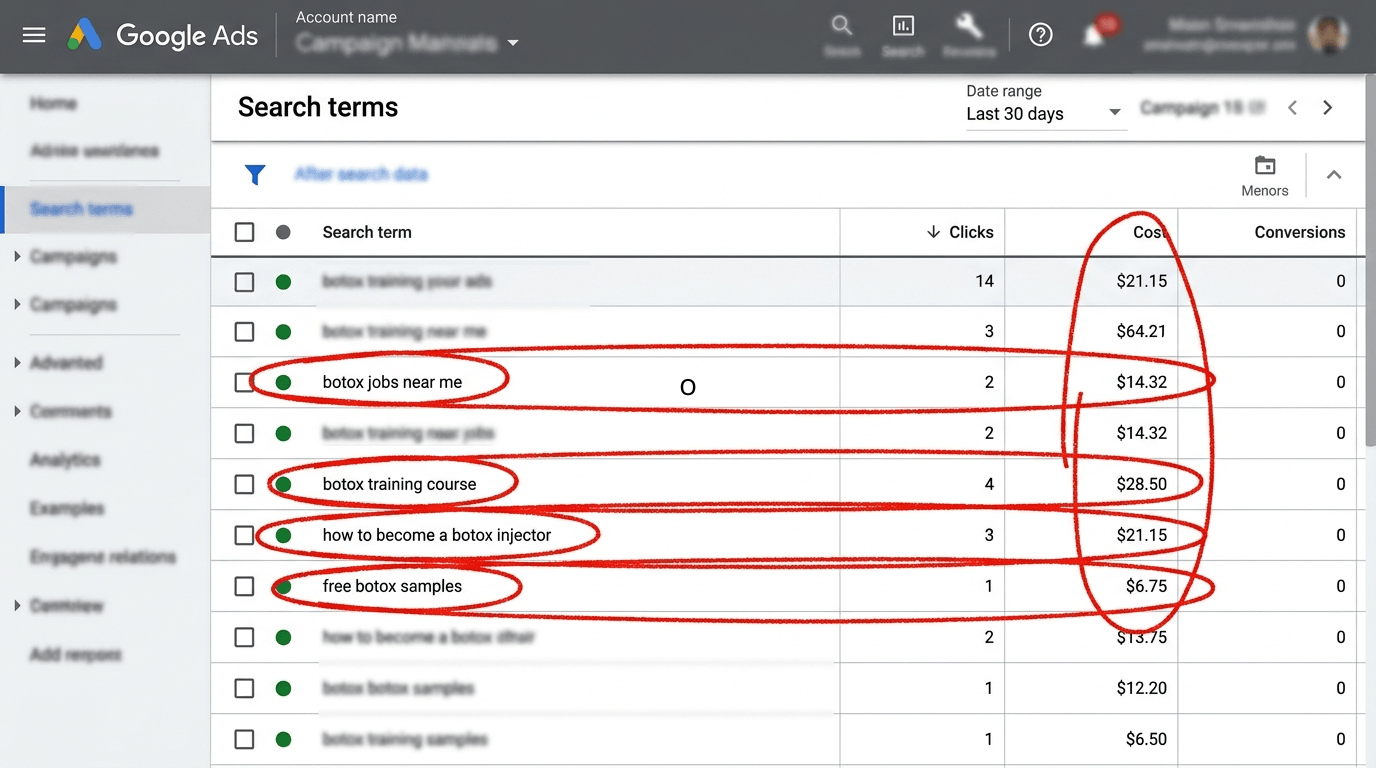
There are two more defaults like this. One shows your ad for loosely related searches like "botox jobs near me" — job seekers, not patients. Another lets Google apply changes to your account automatically, without your approval.
All of these can be turned off in a few minutes. You just have to know where they are and that they exist.
I wrote The Complete Playbook: Google Search Ads for Med Spas to walk you through the entire setup, step by step, in plain English:
- Which default settings to turn off before you spend a dollar
- Which searches to bid on and which to block
- What the page you send clicks to needs to include
- How to check in five minutes a week whether the account is working
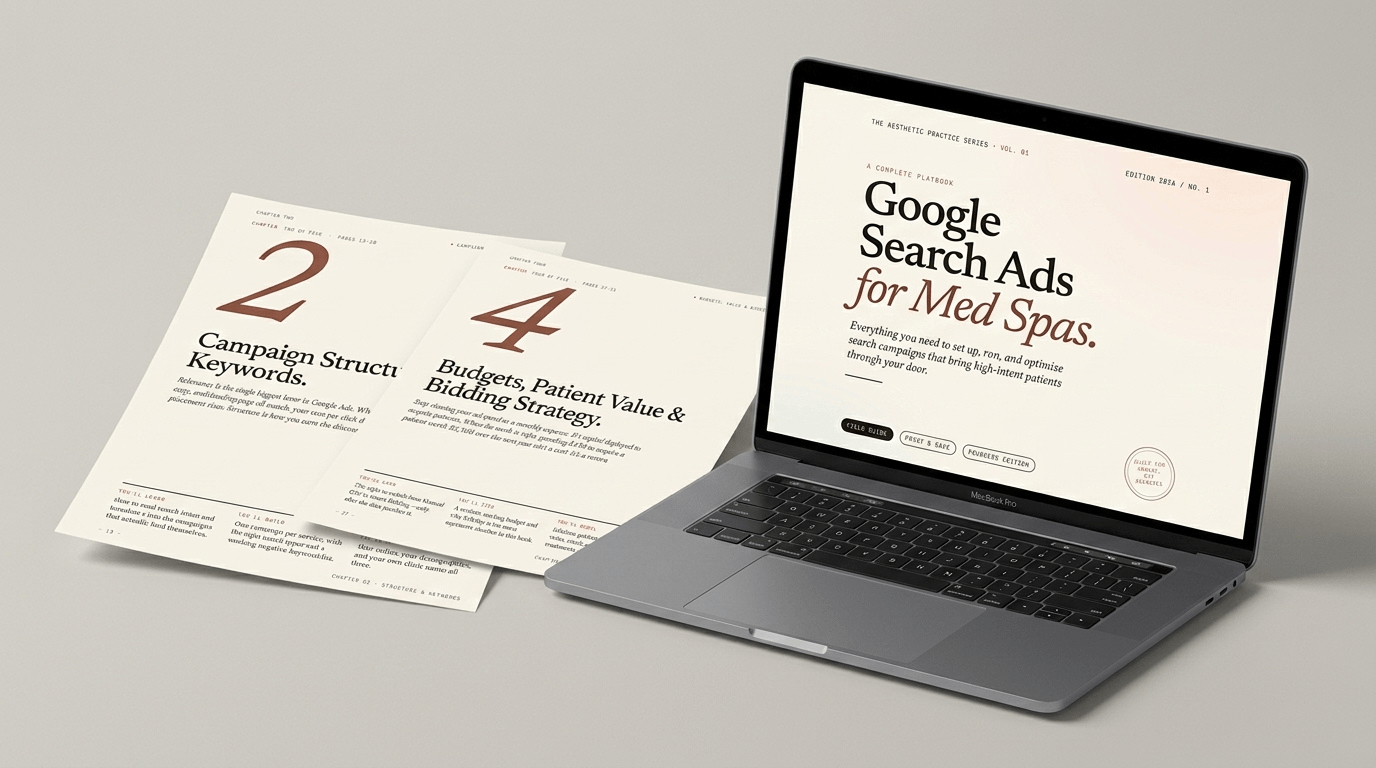
It includes a pre-launch checklist and a calculator that tells you what a patient is worth to your clinic, so you can set your budget from real numbers instead of guessing.
On timeline, I'll be direct: an account built this way typically needs about 90 days to stabilize. After that, returning three to five times your ad spend is a realistic target. Not week two — day ninety.
The Complete Playbook costs $35. That's roughly the cost of three clicks in this market.
Your budget should be spent on the patients already searching for you. This guide shows you how to do that.
This is a sponsored article. Results vary by market and budget; the figures above are illustrative examples, not guarantees of individual outcomes. Not affiliated with or endorsed by Google LLC or Meta Inc. · go.deture.co